
You can learn how to sing, even if you have never sung a note on purpose. The path is simple: learn to breathe well, warm up your voice, train your ear to find pitch, and then sing one easy song all the way through. Do that for 15 minutes a day, and your voice will get stronger, steadier, and more in tune within a few weeks. This guide walks you through that path, step by step.
You do not need a teacher to start, and you do not need a great voice to begin. You need a voice you are willing to use, a quiet room, and a little patience. Everything below is made for a total beginner, and we focus on what to do with your voice today.
Step 1: Learn to Breathe for Singing

Singing starts with breathing. Most beginners breathe high in the chest, with short, shallow breaths. That makes the voice shaky and weak. Singers breathe low, using the diaphragm, the big muscle under your lungs. A low breath gives you steady air, and steady air gives you a steady voice.
How to find your diaphragm breath
Stand up straight and put one hand on your belly, just below your ribs. Breathe in slowly through your nose. Your belly should push out against your hand. Your shoulders should stay still. If your shoulders rise, you are breathing too high. Try again, slower. Now breathe out on a long, slow "ssss" sound, like air leaking from a tire. Keep the stream even. Your belly should move back in slowly as the air leaves.
Do this five times. That is your first singing breath. It feels strange at first, and that is normal. Give it a few days and it will start to feel natural.
A simple breathing exercise
Try this once a day. It takes two minutes.
- Breathe in low and slow for a count of 4.
- Hold the breath for a count of 4.
- Breathe out on "ssss" for a count of 8.
- Rest for a few seconds, then repeat five times.
When the count of 8 feels easy, try breathing out for a count of 12. Do not force it. If you feel lightheaded, stop and breathe normally for a minute.
Posture: stand like a singer
Good posture is part of good breathing. Stand with your feet about shoulder width apart. Let your knees stay soft, not locked. Lift your chest a little, and let your arms hang loose at your sides. Keep your chin level, not pushed up or tucked down. Imagine a string pulling the top of your head gently toward the ceiling. This open position lets your lungs fill fully and lets sound come out freely. If you prefer to sit, sit near the front edge of the chair with both feet on the floor and your back straight.
Step 2: Warm Up Your Voice
Never start singing cold. Your vocal cords are small muscles, and like any muscle, they work better warm. A five minute warm up also protects your voice. Singing hard without warming up can leave you hoarse, and hoarseness is your voice asking you to stop and rest.
Warm up every time you practice, even for a short session. Keep everything gentle. If a warm up hurts or makes your throat scratchy, stop. You are doing it too hard.
Lip trills
Press your lips loosely together and blow air through them so they buzz, like a horse. Now add your voice to the buzz and slide the sound up and down, low to high and back again. Do this for about a minute. Lip trills are one of the best warm ups there are. They relax your lips, your jaw, and your vocal cords all at once.
Humming
Hum a comfortable note with your mouth closed. Feel the buzz in your lips and nose. Now slide the hum slowly up, then slowly down, like a siren. Keep it soft. Hum for about a minute. Humming wakes up the feeling of sound vibrating in your face, which singers call resonance. It also helps you find your pitch without pushing.
Sirens
With your mouth open in a relaxed "oo" shape, slide your voice slowly from your lowest comfortable note to your highest comfortable note and back down. It should sound like a siren. Go slowly and smoothly. Do three slow sirens. This stretches your range gently and connects your low voice to your high voice.
Easy scales
Sing a simple five note scale up and down on "la" or "ma." Start on a low, comfortable note and move up one note at a time. Do not rush. Listen to each note. If you have a piano, a keyboard app, or a free piano website, play each note first, then sing it back. Three slow scales are enough for a warm up.
Step 3: Train Your Pitch
Pitch is how high or low a note is. Singing in tune means matching the pitch you hear. Most beginners who think they "cannot sing" are really just out of practice at matching pitch. It is a skill, and it can be trained.
How to match a note
Play one note on a piano app or a keyboard. Listen to it. Then sing it back on "ah." Do not worry if your first try is off. Slide your voice slowly up or down until it feels like your note blends with the one you hear. When the two sounds match, you will feel the sound settle, almost like two voices becoming one. That is matching pitch.
Practice with five different notes. Play, listen, sing, adjust. Do this for a few minutes in each practice session. Over time, your first guess will land closer and closer to the right note.
Use a tuner app
A free tuner app can show you whether you are sharp (too high) or flat (too low). Sing a note and watch the display. If it says you are flat, aim a little higher. If it says you are sharp, aim a little lower. Do not stare at the screen while you sing. Sing first, then check. The goal is to train your ear, not to chase the needle.
Sing simple melodies by ear
Pick a melody you know by heart. "Happy Birthday" is a good one. Sing it slowly, and listen to each note. Are you landing on the right notes, or drifting? Try singing it again, slower. Songs you know well are the best pitch training, because you already know how they should sound. If a note feels wrong, stop and find it again. Slow and right beats fast and wrong.
Step 4: Sing Your First Song
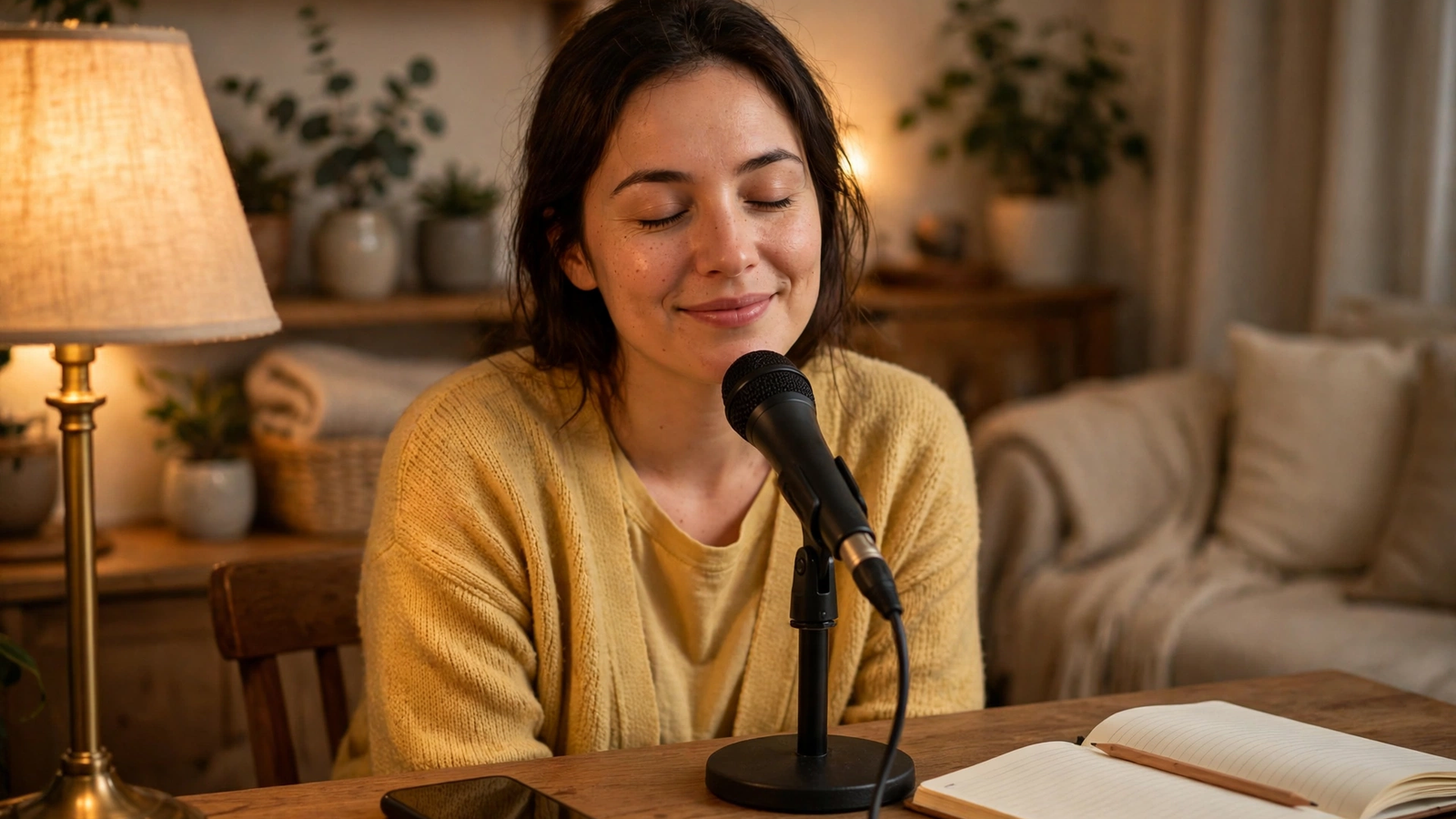
Now it is time to sing a real song from start to finish. Picking the right first song matters. Choose one that is slow, short, and in a comfortable range for your voice. A song you already love is a good choice, because you know how it goes.
Pick a song that fits your voice
A good first song has a small range, meaning the highest and lowest notes are not far apart. It moves mostly by small steps, not big jumps. And it is slow enough that you can breathe between phrases. Folk songs, hymns, and simple pop ballads often fit well. Avoid songs with long high notes or fast runs for now. You will get there, but not on day one.
If a song feels too high, sing it lower. You can move any song down to a key that fits your voice. A piano app can help you find a starting note that feels comfortable. The right key is the one where the highest note feels easy, not strained.
Learn it in small chunks
Do not try to sing the whole song at once. Break it into pieces.
- Listen to the song twice, just listening. Notice where the singer breathes.
- Learn the melody on "la" first, without words. Sing it slowly, phrase by phrase.
- Add the words once the melody feels steady.
- Put the phrases together, two at a time, until you can sing the whole song through.
Take your time. A song learned slowly stays learned. If one line keeps tripping you up, practice just that line five times.
Sing it all the way through
When you can sing the song from start to finish, do it. Stand up, breathe low, and sing it through without stopping. It does not have to be perfect. It has to be complete. That is a real milestone. Record yourself on your phone if you like. Listening back helps you hear what to work on next, and it gives you a record of how far you have come.
Your Daily 15-Minute Routine
Short, regular practice beats long, rare practice. Fifteen minutes a day builds a better voice. Here is a routine you can use every day. It covers breathing, warm ups, pitch, and song work in one short session.
| Minutes | What to do |
|---|---|
| 0 to 2 | Diaphragm breathing: slow breaths in, long "ssss" breaths out |
| 2 to 5 | Warm ups: lip trills, humming, and one or two sirens |
| 5 to 8 | Pitch work: match five notes, then sing a simple melody slowly |
| 8 to 13 | Song work: practice your current song in small chunks |
| 13 to 15 | Sing the song all the way through, or sing a song you enjoy |
Do this at the same time each day if you can. Morning works well, because your voice is fresh. But the best time is the time you will actually do it. If you miss a day, just do 15 minutes again the next day. Steady practice is what builds a voice.
Common Mistakes Beginners Make
Most beginner singing problems come from a few common habits. Fixing even one of them can make a big difference. Here are the ones to watch for.
Singing too loud. Beginners often push their voice to sound strong. Pushing makes the throat tight and the pitch unsteady. Sing at a medium volume. A relaxed medium voice sounds better than a strained loud one, and it lets you hear your pitch clearly.
Holding your breath. Some beginners forget to breathe and run out of air mid-phrase. Plan your breaths. Breathe where the song naturally pauses, usually at the end of a line. A quick low breath is enough. You do not need a huge gulp of air.
Straining for high notes. High notes feel hard because beginners reach for them with the throat. Instead, think of the note as easy and light. Keep your jaw loose and your throat open, like a yawn. If a note hurts or cracks, stop. Sing it lower for now, or leave it out and come back to it later.
Singing from the throat. If your throat feels tired after singing, you are probably pushing from the throat instead of supporting with your breath. Go back to the low breathing exercise. A supported voice feels easy in the throat and busy in the belly.
Skipping warm ups. It is tempting to jump straight to the song. Warm ups take five minutes and make everything after them easier. They also protect your voice. Make them a habit, not an option.
Practicing only when you feel like it. Motivation comes and goes. A habit stays. Put your 15 minutes on your calendar like any other appointment. Most days you will be glad you did.
Comparing yourself to recorded singers. A recording has been mixed, tuned, and polished. Your practice room voice will not sound like that, and it is not supposed to. Compare yourself to your own voice last week, not to a finished record.
Singing through pain. A little tiredness after a long session is normal. Pain is not. If your throat hurts, if your voice goes hoarse, or if speaking feels rough, stop singing and rest your voice. Drink water. Do not whisper, which strains the voice more than speaking softly. If hoarseness lasts more than two weeks, see a doctor.
Your 7-Day Practice Schedule
A week of short, focused practice gives you a real start. Each day has one focus, so you build a different skill each time. Repeat this week as many times as you like, with a new song when you are ready.
| Day | Focus | What to do |
|---|---|---|
| Day 1 | Breathing | Breathing exercise, posture check, then hum your song's melody |
| Day 2 | Warm ups | Full warm up, lip trills and sirens, then easy scales |
| Day 3 | Pitch | Match notes with a piano app, sing "Happy Birthday" slowly |
| Day 4 | First song | Learn your song's melody on "la," phrase by phrase |
| Day 5 | Words | Add the words to your song, then sing two phrases together |
| Day 6 | Full song | Sing the whole song through twice, record the second try |
| Day 7 | Rest and listen | Light warm up only, listen to your recording, pick your next song |
On Day 7, listen to your recording from Day 6. What sounds better than it did on Day 1? What still needs work? That is your plan for next week. Small gains add up fast when you practice every day.
How to Keep Improving
After your first week, keep the same routine and change one thing at a time. Learn a second song, this time a little faster or with a slightly wider range. Add a new warm up, like a longer scale. Try singing along with a recording, matching the singer's pitch and timing.
When you feel ready, consider a lesson or two with a voice teacher. A teacher can hear things you cannot hear yourself, like tension you do not feel or habits you do not notice. Even a few lessons can speed up your progress. Look for a teacher who works with beginners and makes you feel comfortable.
You can also sing with others. A choir, a community group, or a casual sing-along with friends gives you practice hearing your voice blend with others. Singing with people is one of the fastest ways to improve your ear and your confidence.
Frequently Asked Questions
Can anyone learn how to sing?
Almost anyone can learn to sing better. Very few people are truly unable to match pitch, and most people who say they cannot sing have simply never practiced. If you can hear the difference between two notes, you can train your ear and your voice. Progress is usually slow at first and then speeds up, so give it a few weeks before you judge yourself.
How long does it take to learn to sing?
It depends on where you start and how often you practice. With 15 minutes a day, most beginners notice a real difference in 4 to 6 weeks. Their breathing feels steadier, their pitch is more reliable, and singing feels easier. Singing well takes longer, like any skill, but you do not need to wait months to enjoy it. Singing your first song all the way through is a win you can reach in your first week.
Do I need a good voice to learn how to sing?
No. A "good voice" is mostly a trained voice. What sounds like natural talent is usually years of practice. Your voice has its own sound, and training brings out the best of it. The goal is not to sound like someone else. It is to sound like you, in tune and in control.
What is the best way to warm up your voice?
Lip trills, humming, and slow sirens are the best warm ups for beginners. They are gentle, they wake up the whole voice, and they take about five minutes. Start soft, go slow, and stop if anything hurts. Warm up every time you sing, even for a short session.
How can I tell if I am singing in tune?
Record yourself and listen back, or sing with a tuner app. A tuner shows whether you are sharp or flat on each note. Singing along with a piano note and listening for the moment your voice blends with it also works well. Your ear gets better with practice, so check often at first and less often as you improve.
Should I take singing lessons?
Lessons help, but they are not required to start. This guide gives you a full beginner path you can follow alone. When you want faster progress, or when you hit a wall you cannot fix on your own, a teacher is the best next step. Even a few lessons can correct habits that would take months to fix alone.
Is it bad to sing every day?
No, singing every day is fine as long as you warm up and stop when your voice feels tired or sore. Fifteen minutes a day is a safe amount for a beginner. If your voice feels hoarse, take a day off. Rest is part of training, not a break from it.
What should I drink before singing?
Water is the best choice. Room temperature water keeps your vocal cords hydrated. Avoid very cold drinks, which can tighten the throat, and avoid milk before singing, which can make mucus thicker for some people.
Conclusion
Learning how to sing comes down to a simple path. Breathe low and steady. Warm up for five minutes. Train your ear to find pitch. Learn one song in small chunks, then sing it all the way through. Do that for 15 minutes a day, and follow the 7-day schedule to build the habit.
You do not need a great voice to start. You need a voice you are willing to use and a little patience. Your first song will not be perfect, and that is fine. It will be yours, sung from start to finish, and that is the real beginning. Pick a song today, warm up, and sing it.